
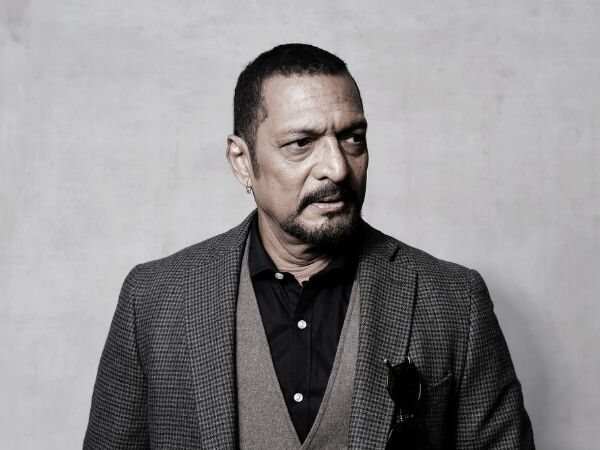
Remembering Nana Patekar
Nana Patekar was never a conventional star. He was an actor who became a star despite himself. He was born Vishwanath Patekar on January 1, 1951 in Murud-Janjira, Maharashtra. His early years were spent in Murud with his two brothers while his father worked in Mumbai in the textile business.
One of the most revealing stories he told about his childhood is that the family fell from middle-class circumstances into poverty when he was around 13. He began working while still at school, painting film posters in Mumbai. He recalled walking several kilometres after school to paint posters, earning a tiny amount and sometimes receiving a meal for his work. He later said that the hunger and humiliation of those years taught him more about acting than a formal acting school could have.
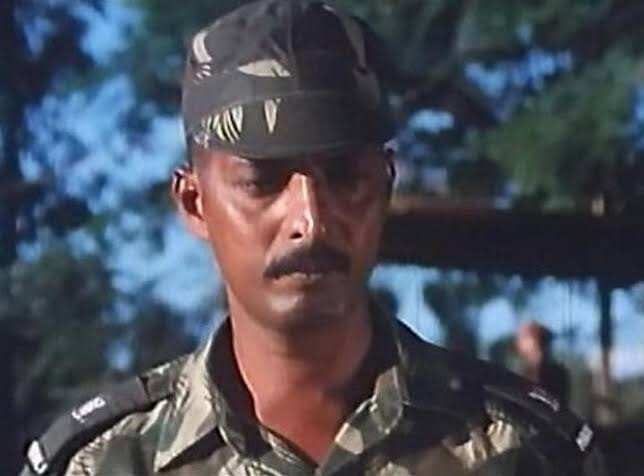
He studied at the Sir J.J. Institute of Applied Art in Mumbai and initially worked in advertising. Theatre, however, was his real education.
Patekar was doing theatre from his school days. His father encouraged his interest in plays and took him to see tamasha and theatre performances. Patekar subsequently became associated with the Marathi theatre movement and worked with influential theatre personalities including Vijaya Mehta.
He was part of the Marathi theatre tradition that produced actors who weren’t particularly interested in glamour or conventional screen beauty. The stage gave Patekar his most important tools: voice, physicality, timing, stillness and the ability to hold an audience without depending on editing.
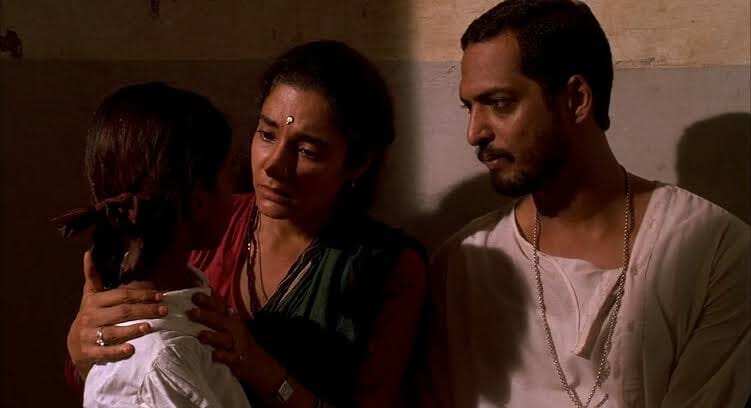
Patekar credited Smita Patil with pushing him towards films. He had known Smita through the Pune theatre circuit. When she was already making films, she encouraged him to enter cinema. He initially resisted because he was happy doing theatre. She had worked with him in Gaman and took him to filmmaker Ravi Chopra for Aaj Ki Awaaz (1984). His association with Patil became an important part of his early film career. He worked with her in films including Aaj Ki Awaaz, Gaman, Sutradhar, Awam and Giddh.
Patekar’s Hindi film debut is generally credited to Muzafar Ali’s Gaman (1978). His early career was spent moving between Hindi and Marathi cinema, often in small or supporting parts. His Important early appearances include Gaman (1978), Aaj Ki Awaaz (1984), Ankush (1986), Pratighaat (1987), Andhaa Yudh (1987), Awam (1987), Trishagni (1988) and Salaam Bombay! (1988).
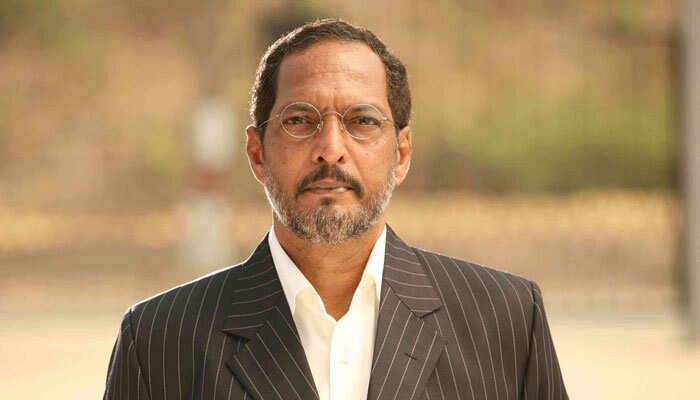
His role in Salaam Bombay! brought him considerable critical attention, but the real transformation came with Parinda (1989). Vidhu Vinod Chopra’s Parinda was arguably the film that established Nana Patekar as a major screen actor. As Anna, the ruthless Mumbai underworld don, he didn’t behave like the standard Hindi-film villain. He was frightening precisely because he didn’t constantly advertise his villainy. His Anna could be conversational, almost ordinary, and then suddenly erupt into violence. Patekar won the National Film Award for Best Supporting Actor for the performance and also won the Filmfare Award in the same category.
Patekar didn’t want merely to act. For Prahaar (1991) he trained extensively with the Indian Army. He underwent almost three years of military training while preparing for the film and wrote the script during that period. The film allowed him to combine several interests: acting, writing, directing and his fascination with discipline and the armed forces.
Prahaar is particularly important in retrospect because his relationship with the Army didn’t end with the film. He joined the Territorial Army and trained with the Maratha Light Infantry. During the 1999 Kargil War, he reportedly obtained special permission to be with troops near the Line of Control and spent more than two weeks with soldiers. His military connection eventually saw him retire from the Territorial Army as a Lieutenant Colonel.
The 1990s were probably the most important decade of Patekar’s career. He moved effortlessly between heroes, villains, supporting roles and morally ambiguous characters.
In Angaar (1992), as Majid, Patekar demonstrated how compelling he could be as a villain without relying on conventional villain mannerisms. He won the Filmfare Award for Best Villain. In Tirangaa (1993), his portrayal of Shivajirao Wagle became one of the defining patriotic performances of the period. It was loud, theatrical and unabashedly emotional, but Patekar had the conviction to make the rhetoric work. Krantiveer (1994) turned Patekar into a full-fledged star. As Pratap Narayan Tilak, an alcoholic and disillusioned man who becomes a revolutionary figure, Patekar combined rage, vulnerability and rhetoric.He won the National Film Award for Best Actor and the Filmfare Award for Best Actor. The film also gave him one of the characteristics most associated with his career: the monologue.
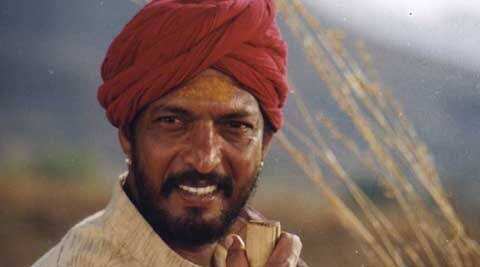
Patekar could take an extended piece of dialogue and make it sound as though the character had arrived at those words spontaneously rather than memorised them. His performance as a psychologically disturbed husband in Agni Sakshi (1996) was another landmark. He played a man whose apparent charm gradually gives way to obsession and menace. The performance won him his third National Film Award, this time for Best Supporting Actor.
Sanjay Leela Bhansali’s Khamoshi: The Musical (1996) showed another dimension. As Joseph, Patekar played a deaf-mute man’s emotional world without having dialogue as his principal tool. The film is important because it demonstrated that the actor who was famous for shouting could also work through silence.
His 2000s work included a number of strong performances in films like Shakti: The Power (2002), Ab Tak Chhappan (2004), Apaharan (2005), Welcome (2007), Raajneeti (2010). Ab Tak Chhappan was particularly significant. As Sadhu Agashe, the encounter specialist, Patekar played a policeman who has become emotionally numb from killing. Unlike the flamboyant policeman of mainstream Hindi cinema, Agashe was terse, weary and almost frighteningly matter-of-fact. The role reinforced Patekar’s reputation as an actor who could communicate violence without glamourising it.
Perhaps the most surprising turn of his career was Welcome (2007). As Uday Shetty, Patekar turned himself into a comic performer without abandoning his intimidating persona.
The joke was partly that he looked and sounded like Nana Patekar, but behaved like a gangster trapped inside a ridiculous comedy. His partnership with Anil Kapoor’s Majnu Bhai became one of the film’s biggest attractions. This was an important career move because it destroyed the idea that Patekar could only play angry, serious or violent characters. He could do comedy precisely because he played it with a straight face. He reprised the character in Welcome Back (2015).
In Prakash Jha’s Raajneeti (2010), Patekar played Brij Gopal, a politician inspired in part by the political archetype of Krishna. It was another reminder that he was particularly effective in films involving power. Whether he played a gangster, politician, policeman, soldier or revolutionary, Patekar was fascinated by characters who possessed authority but were psychologically damaged by it.
If Krantiveer was the role that defined his star power, Natsamrat (2016) was perhaps the role that best brought his life full circle. The Marathi film, directed by Mahesh Manjrekar, was based on the celebrated Marathi play by V.V. Shirwadkar. Patekar played Ganpat Belwalkar, an ageing theatre actor who has spent his life playing Shakespearean roles but finds himself struggling with ageing, family and abandonment. There was something almost autobiographical about the casting. A theatre actor who had built his identity through performance was now playing a theatre actor confronting the disappearance of his own relevance. Patekar won the Filmfare Awards Marathi Best Actor In A Leading Role (Male) trophy for Natsamrat.
Patekar should not be remembered merely as a Hindi-film actor. He started his Marathi career with Sinhasan (1979). His Marathi cinema includes important films such as Raghu Maina, Gad Jejuri Jejuri, Maaficha Sakshidar, Natsamrat, Dr. Prakash Baba Amte – The Real Hero. His performance as Dr Prakash Amte too won him a Filmfare Awards Marathi Best Actor In A Leading Role (Male) Award.
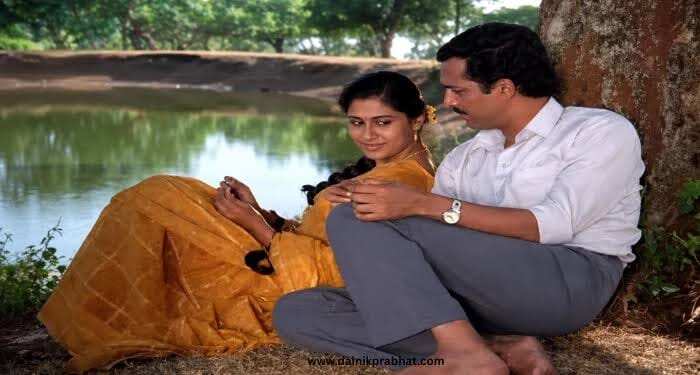
Patekar married Neelakanti Patekar in 1978. She was herself an accomplished Marathi actress and theatre performer. The couple had two sons, one of whom died at approximately two-and-a-half years of age. Their surviving son is Malhar Patekar. Nana and Neelakanti lived separately for many years but, according to reports, did not formally divorce each other. There were rumours about his affairs with various actresses in the 1990s but his personal life was otherwise kept remarkably private.
In 2015, Patekar and Marathi actor Makarand Anaspure established NAAM Foundation in response to drought, farmer distress and suicides in Maharashtra. The organisation initially provided financial assistance to families affected by farmer suicides but subsequently shifted towards longer-term rural development and water conservation. Patekar also became known for giving away prize money and charitable contributions. He reportedly donated the entire cash component of the Raj Kapoor Special Contribution Award to drought relief.
Patekar is part of the cast of Eetha, Laxman Utekar’s forthcoming Hindi film about legendary Marathi Tamasha and Lavani performer Vithabai Narayangaonkar. The film is currently scheduled for December 2026 release, meaning it could become his final released screen performance. His final film appears to return to the very world from which he came, closing a circle for the nomad.
He suffered a cardiac arrest at his home in Dona Paula, Goa, and was taken to Manipal Hospital, where doctors were unable to revive him. He was declared dead around 5.25 am today.
Also Read: Remembering Nana Patekar’s Best Films: Parinda, Krantiveer, Welcome and More